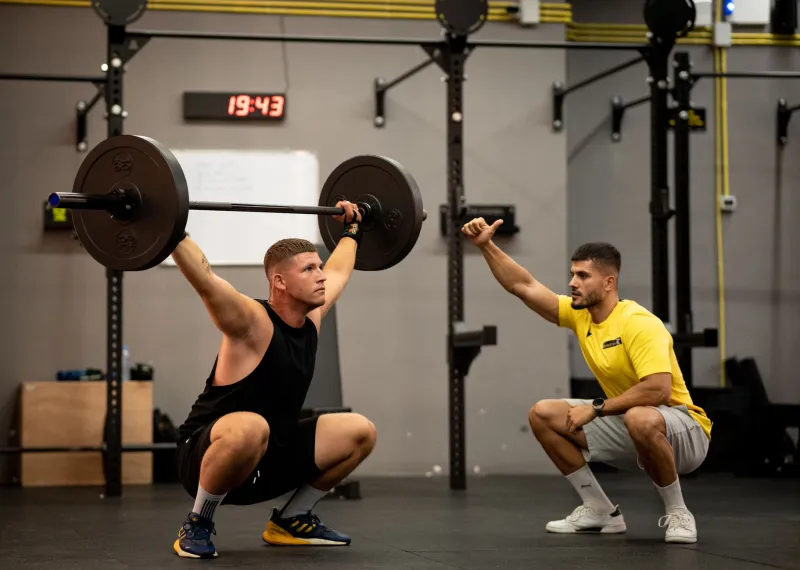
Save a Ride for Tomorrow: Finish Your Workout With Something Left

Walk past a Ferris wheel at the end of the night and you'll see something most gyms never teach: people step off. They don't get flung out of the seat. They don't crawl down the support beams. The ride ends, the gate opens, and they walk away steady on their feet. That's the energy you want at the end of a training session, too. Not smashed. Not fried. Just done.
The Exit Gate Isn't a Collapse
A lot of us treat the end of a workout like a test of will. We pile on sets until the bar slows to a crawl, the last rep looks like a car accident, and the only thing left is a puddle on the floor. That feels productive. It looks hardcore. But hardcore and effective aren't the same thing, especially when you're trying to get stronger over months and years, not just survive one Sunday session.
The Ferris wheel exit gate is a useful mental model because it marks a choice. The ride operator doesn't wait until everyone is dizzy and sick. The ride ends while it's still fun. You step off with your legs under you, ready to come back another day. In the gym, that means ending the session while your form still looks like training, not damage control.
Productive Fatigue vs. Junk Volume
Fatigue is a tool. Junk volume is a tax. The trick is telling them apart.
Productive fatigue shows up when you've done enough quality work to create a training stimulus. Your last hard set feels challenging, but you could still do one or two more reps with decent form. Your rest periods are roughly where you planned them. Your technique holds together. You leave a little tired, but not wrecked.
Junk volume shows up when you keep going just to hit a number. The bar speed falls off a cliff. Your lower back starts rounding. You're resting five minutes between sets of curls. You're not training anymore; you're collecting fatigue receipts. That extra work doesn't buy more strength. It just borrows from your next workout.
For a US lifter juggling a job, kids, and a 6 a.m. alarm, that borrowing gets expensive fast. The goal is not to see how much you can survive on Monday. The goal is to still be strong on Thursday.
How to Set a Real Finish Line
A smart finish line is not a feeling. It's a standard you set before the workout gets loud. Pick a few markers and stick to them.
First, decide your top-end effort for the day. If you're using reps in reserve, leave one or two in the tank on your final hard set of the main lift. That doesn't mean every set is easy. It means the last set is honest, not heroic.
Second, watch bar speed. If your first set moved like a sports car and your third set moves like a rented moving truck, that's your exit gate. You can drop the weight and keep going, or you can call it. Both are fine. Grinding out ugly reps just to prove a point is not.
Third, use form as a brake. When your knees cave, your shoulders roll forward, or your setup takes longer than the set itself, you're past the gate. Stop. Save the fight for next time.
Fourth, set a hard stop for accessories. Most people don't need a sixth exercise. They need to finish the first four with intent and go home. If you can still do more arm work after your main session, great. That doesn't mean you should.
The Leave-One-Ride-Left Checklist
Here's a simple way to apply the principle in the middle of a workout.
- Ask yourself: could I do one more clean rep on this set? If the answer is no, you're at the gate.
- Check your rest times. If they've doubled without a plan, you're done with quality work.
- Watch your setup. If it's getting sloppy, the set is over.
- Keep a note of how you feel 24 hours later. If you're still wrecked two days later, you went past the exit.
- Remember that consistency beats one brutal session. Showing up three times a week with gas in the tank will outbuild one hero workout followed by three days on the couch.
Why This Builds More Strength
Leaving a little on the table sounds soft. It isn't. It's dose control. Strength training works because you apply enough stress, recover from it, and repeat. If you always finish at absolute zero, you're constantly digging a recovery hole. Eventually, your body stops adapting and starts surviving.
When you finish with something left, you recover faster. Your next session is sharper. Your technique stays cleaner. You stack more good weeks together. That's how PRs actually happen, not through one legendary workout you talk about at brunch, but through a long line of solid sessions you can repeat.
So next time you're in the gym and the voice in your head says one more set, one more drop set, one more run at the bar, ask yourself a simple question: am I stepping off the ride, or am I getting thrown off it? The strongest lifters know the difference. They leave the gym with their shoulders back, their bag over one arm, and a little gas in the tank for tomorrow.