Before the Bar Bends: The Pre-Lift Audit That Lets You Go Heavier
The safety bar on a Ferris wheel is the least exciting part of the whole operation. It doesn't spin. It doesn't light up. It just clicks down over your lap and disappears from your attention. That's the point. The bar isn't the thrill—it's the permission slip for the thrill.
Strength training works the same way. The lifters who progress the longest aren't the ones who ignore risk. They're the ones who build tiny safeguards into every session so they can push closer to their real limit without lighting their progress on fire. Call it the safety bar rule: the unglamorous stuff is what lets you go hard.
Here's a five-point pre-lift audit I use before any heavy set. It takes about three minutes. It's not glamorous. It is, however, the reason you can walk into the gym on a Saturday and chase a PR instead of babysitting a tweaked back for six weeks.
Check 1: The Warm-Up Ramp, Not the Warm-Up Ritual
A lot of us treat the warm-up like a box to check. Five minutes on the bike, a few arm circles, maybe a foam roller stare-down. That's fine for getting blood moving, but it doesn't tell you whether your body is ready to handle real weight.
The ramp does. After a general warm-up, start light and climb in deliberate steps: maybe 40 percent, 60 percent, 75 percent of your working weight. Each set is a diagnostic. If 135 feels like 225, you need more warm-up or less weight today. If it feels smooth and fast, keep climbing. The ramp is your first safety check because it gives you permission to either push forward or pull back before the bar gets heavy.
Check 2: Rack and Spotter Setup—Set the Safety Bar Before You Need It
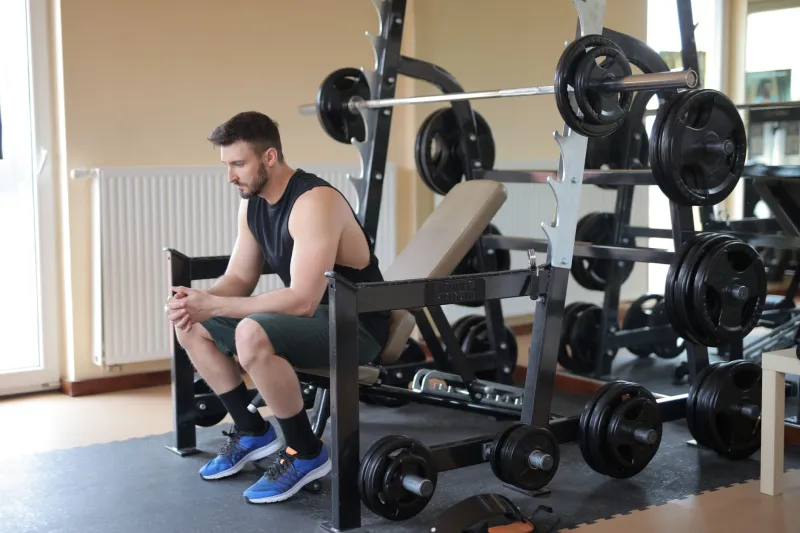
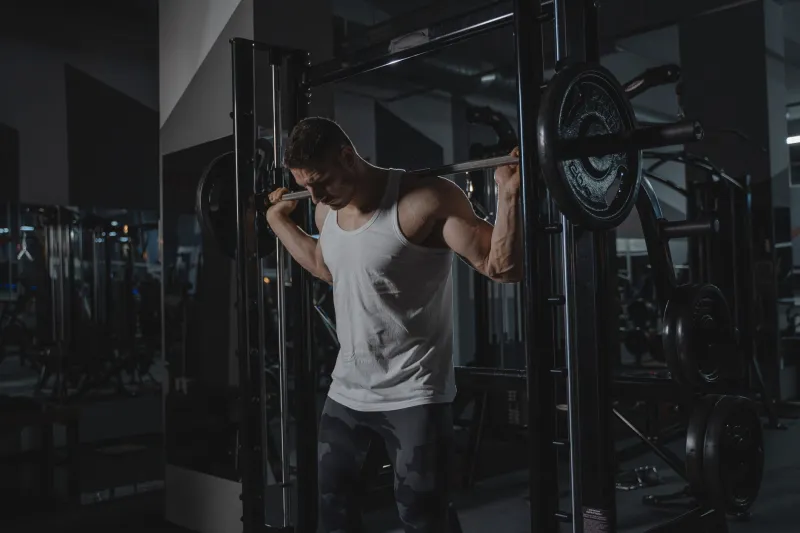
This is the literal version of the Ferris wheel bar. On a squat, set the safety arms just below your bottom position—low enough that you can complete a full rep, high enough that you're not doing a limbo contest to get out from under a failed lift. On bench, set them so the bar can rest on your chest without pinning you.
If you're using a spotter, brief them. Don't assume they know what you want. Say: 'I'm doing five. If I say take it, take it. If the bar stops moving, take it.' A good spotter is a safety bar with a pulse. And if you're lifting alone, the safety arms are non-negotiable. They don't get tired. They don't get distracted by their phone.
Check 3: Form Benchmark—Earn the Load
Before you add plates, hit a rep standard that proves your body is moving the way you want. Five clean squats with the empty bar. Eight perfect push-ups. Ten crisp Romanian deadlifts with a light dumbbell. Pick a benchmark and stick to it.
If your knees cave, your lower back rounds, or your bar path looks like a squiggle, the bar stays light. This check is ego insurance. It's also a performance tool. When you know your form is locked in, you can load the bar with confidence instead of hope. That confidence lets you push harder on the sets that count.
Check 4: Recovery Status—Read the Dashboard
Sleep, soreness, stress, hydration. Give each one a quick score from 1 to 10. You don't need a lab test. You need an honest read on the dashboard.
If two or more of those are in the gutter, adjust the plan. Maybe you drop the top set and keep the volume. Maybe you switch to a machine or a lighter variation. The point isn't to baby yourself. The point is to stop pretending your body is a robot. A bad recovery day is information, not a character flaw. Use it to make a smarter decision, then get to work.
Check 5: Exit Plan—Know How to Bail
Every lift has a fail. Practice it before you need it. Squat: dump the bar behind you or use the safeties. Bench: roll of shame or safeties. Deadlift: just set it down. Overhead press: step back and let it fall.
Knowing the exit makes the entry less scary. Fear is a brake. An exit plan releases it. When you know you can fail safely, you're more willing to push close to your limit—and that's exactly where the progress lives.
The Bar Clicks Down. Now You Can Ride.
At Gym Ferris, we're not interested in bubble-wrapping your training. We're interested in helping you ride the grind for decades. The safety bar rule isn't a leash; it's a launchpad. Run the audit, load the bar, and go heavier than you did last week. The ride is better when you know the bar is locked.