Motion Isn't Progress: 5 Red Flags Your Workouts Are Going Nowhere
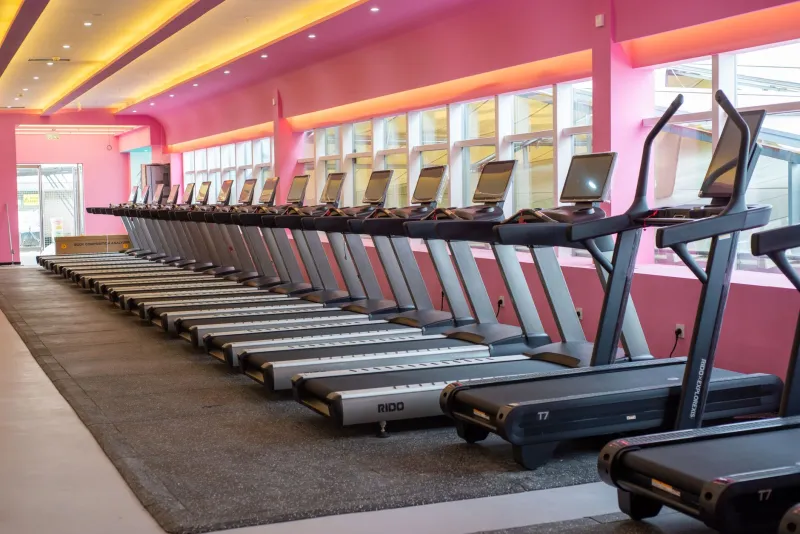
Here's a hard truth most gyms won't tell you: you can be extremely busy at the gym and still be going nowhere.
We see it every January and every Monday. People grinding through sessions, drenched in sweat, checking boxes — and six months later, their lifts look the same, their body looks the same, and their motivation is running on fumes. That's what we call riding the Ferris wheel: plenty of motion, zero elevation. You're moving, but you keep ending up exactly where you started.
If any of the five signs below hit a little too close to home, don't panic. Every one of them has a fix. Let's break it down.
Sign #1: You Could Do Your Workout Asleep
Same machine. Same seat height. Same weight, same reps, same order, same playlist. If your session requires zero decisions, your body stopped being challenged weeks ago.
The body adapts to what you ask of it — and then it stops changing when the ask never changes. Autopilot is comfortable, but comfort is where progress goes to die.
The fix: Change one variable per session. Add five pounds to your main lift, cut your rest periods by 15 seconds, or swap a machine for its free-weight cousin. Small disruptions, repeated consistently, restart the adaptation engine.
Sign #2: The Numbers Haven't Moved in Months
Pull up your notes app or — let's be honest — try to remember the last time you actually added weight to anything. If your bench, squat, or deadlift looks identical to what it was in the spring, you're not training. You're rehearsing.
The fix: Run a progressive overload reset. Pick two or three core lifts and spend the next eight weeks adding a small amount of weight or one rep each week. Track everything in writing. What gets measured gets moved — it's that simple.
Sign #3: You're Always Sore, Never Stronger
Feeling wrecked after every workout feels productive, but chronic soreness with no strength gain is a red flag, not a badge of honor. It usually means you're chasing exhaustion instead of progression — random workouts with no structure, no periodization, no plan.
The fix: Structure beats spontaneity. Follow a written program with built-in progression phases, and schedule a deload week every six to eight weeks where you cut volume by roughly half. Deloads aren't weakness; they're when your body actually cashes in on all that work.
Sign #4: Your Goals Expired Before Your Gym Membership Did
Ask yourself right now: what are you training for? If the answer is a shrug, that's the problem. "Just staying active" is fine as a lifestyle, but it won't pull you out of a plateau. Vague goals produce vague results.
The fix: Do a goal audit. Write down one specific, measurable target with a deadline — deadlift 275 by June 1, run a sub-30 5K, do ten strict pull-ups. Then reverse-engineer your weekly training around it. Suddenly every session has a job to do.
Sign #5: You dread sessions you used to love
This one's sneaky. When your routine stopped working, your brain noticed before you did. Persistent dread, boredom, and the constant temptation to skip aren't discipline failures — they're data. Your mind is telling you the work has become meaningless.
The fix: Earn back the win. Pick something new and slightly intimidating: a kettlebell complex, a boxing class, a strength benchmark you've never tested. Novelty plus a fresh challenge rebuilds the feedback loop between effort and reward.
Step Off the Wheel
Here's the bottom line: motion without elevation is just scenery. If you've been stuck in cruise control, you don't need more willpower — you need a plan that actually points somewhere.
Audit your goals. Track your numbers. Program your progression. Take the deload. Then get back under the bar with a reason for every rep.
The wheel spins whether you're on it or not. The climb? That's a choice. Make it this week.